What is RTO, and where does the cost actually go
If you sell cash-on-delivery in Pakistan, you meet this word every week — what RTO actually is, and where its cost comes out of your business.
Bifrost Tech
The parcel went out. The customer did not take it. It came back — and you are left without the payment, without the time, and without the stock that spent two days on the road.
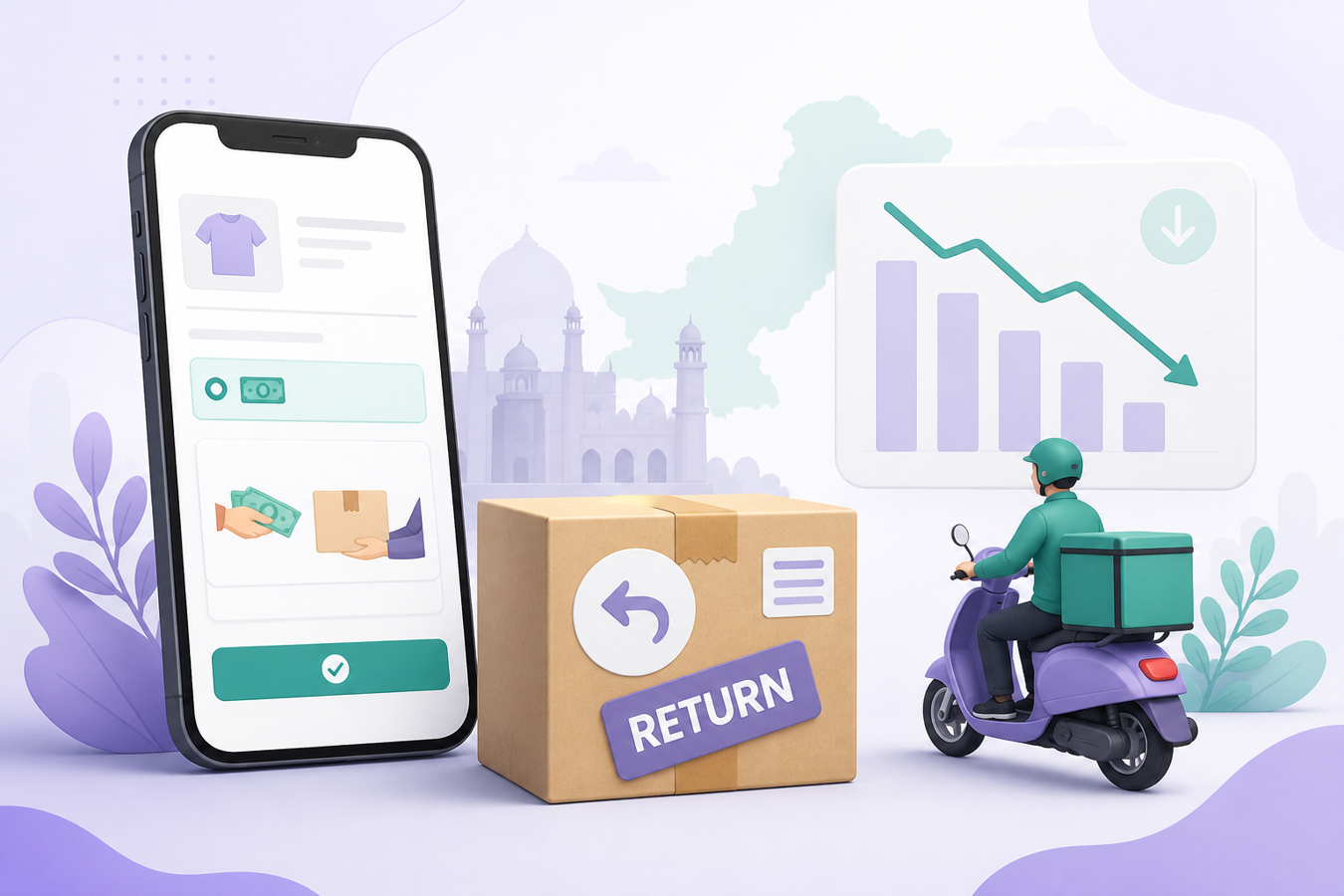
This is RTO: Return to Origin. The parcel goes back to where it started, which is you.
If you sell cash-on-delivery in Pakistan, you meet this word every week. This post answers two questions: what RTO actually is, and where its cost comes out of your business.
First, RTO and a return are not the same thing
The distinction matters, because the two cost you in completely different ways.
A return is when the customer accepts the parcel, pays for it, and sends it back later — wrong size, changed their mind, something was faulty.
An RTO is when the parcel never reached the customer at all, or reached them and was refused. The payment never happened. The parcel travelled through the courier's network and came back to you.
And the reason is not always "the customer refused." The common ones:
- The phone was never answered, or the number was wrong to begin with.
- The address was incomplete — no area name, no landmark, or a city written in a form the courier's system could not match.
- Nobody was home, and the courier used up its delivery attempts.
- The order was an impulse, and two days later the customer had moved on.
- The customer looked at the parcel and refused it.
These are different problems with different fixes — but on your courier bill they all look identical. That is the expensive part of RTO: it does not tell you why it happened.
Now the real question — where does the cost go
Most merchants think of RTO as a single charge: "the return fee got added." In practice the cost of one RTO parcel comes from five different places, and it shows up in three different parts of your business — on the courier bill, in your cash flow, and in your warehouse.
You will not find a figure in this post, and that is deliberate. Every courier's rate card is different, every contract is different, and every store's product cost is different. What is the same for everyone is where the cost lands — how much is written only in your own paperwork. The last section shows you how to work out your own number.
1. The forward leg — the trip the parcel already made
The parcel travelled from your warehouse to the customer's city. That trip happened, whether or not the parcel ever reached the customer's hands.
A failed delivery does not give that cost back. This is the part most often left out of the arithmetic: when merchants add up what an RTO cost them, they count the journey home and forget that the journey out belonged to the same failed order.
2. The return leg — the trip back
The parcel then travelled from the customer's city back to your warehouse. That is a second journey, and it lands in somebody's account too.
Whether the return leg appears as its own line item depends on your contract. Your rate card is what answers this — we are not quoting any courier's rates or policies, because those belong to each merchant's own contract.
3. The courier's handling charge
Beyond the two journeys, the parcel has to be scanned again, held in a warehouse, loaded onto a returning vehicle and delivered back to you. That is work the courier does, and depending on the rate card it can carry a separate charge of its own.
This is the third line item. On the bill it appears under a name like "handling" or "RTO charge". Find all three separately on this month's invoice — it is worth knowing exactly what you are being billed for.
4. Trapped capital
This cost appears on no invoice, which is exactly why it usually goes uncounted.
The day you shipped that parcel, the stock left your warehouse. Your money is sitting inside it — paid to a supplier, or spent making it. Under COD you get that money back when the customer takes delivery and the courier remits to you.
An RTO breaks that chain at the start. The stock is gone, the payment never arrives, and until the parcel is physically back — which takes days — that item cannot be sold and cannot go into another order. Your money is inside a box that is riding back to you.
The more stock sitting in that state, the more of your cash is standing still. For a small store this is often the thing that stops you buying the next lot of inventory.
5. Re-stocking — turning returned stock back into sellable stock
The parcel arrives back. Now the work starts:
- Opening the box and checking the item.
- Re-packing it, because the packaging has usually taken a beating.
- Putting it back on the shelf and correcting your inventory.
- Sometimes finding it can no longer be sold at all.
That is time — yours, or your staff's — and it was time that could have gone into another order. And if the item is no longer sellable, that parcel took the whole product from you, not just the shipping.
The point is that all five land together
On a single refused parcel these five things do not happen separately. They happen at once, on the same order.
And they surface in three different places: the first three on your courier's bill, the fourth in your bank balance and cash flow, the fifth in your warehouse and your own hours.
That is why the full cost of RTO is not visible from the courier bill alone. The billed part is the clearest part. It is not the whole picture.
How to work out your own number
You can produce the figure we cannot, because the paperwork is yours. It is an evening's work:
- Open your courier's rate card. Write down the forward leg, the return leg and the handling charge for your own city.
- Write down the product cost of one RTO parcel — what the item cost you, not what you sell it for.
- Count last month's RTO parcels from your own records.
- Separate out the ones that came back unsellable.
Now you have your real number — not an article's estimate, but your own store's arithmetic. And the day that number is in front of you, the next question changes on its own: from "how expensive is RTO?" to "why was that parcel sent at all?"
What comes next
RTO does not go away completely — treat any COD claim that it does with suspicion. But orders that already look weak before dispatch can be identified, and the address errors that can be corrected before a parcel is ever handed over are the cheapest fix available to you.
There is more detail on how here: How to reduce courier return rates on Shopify COD.
Return Guard
Built for Pakistani Shopify stores. It checks COD orders against built-in rules before dispatch, corrects Pakistani city names in the shipping address, watches courier delivery timelines and alerts you on late parcels, and compares couriers using your own order data.
The decision always stays yours — the app never cancels or holds an order by itself, and we do not message your customers. That conversation remains yours.
About Return Guard